Water contamination is a common but often overlooked cause of diesel fuel system problems. For trucks, marine engines, agricultural machinery, construction equipment, and industrial power systems, excess water in fuel can accelerate corrosion, impair fuel injection, and reduce equipment reliability. An oil-water separator helps remove water and suspended contaminants before they reach sensitive downstream components. However, when the separator becomes clogged, damaged, or overloaded, its protective performance may decline.
Recognizing Fuel Water Separator Problems early helps maintenance teams reduce unexpected downtime, avoid unnecessary component damage, and maintain stable fuel delivery. Understanding the warning signs, inspection procedures, and correct replacement practices is essential for fleet operators, equipment manufacturers, and industrial filtration buyers.
A failing or poorly maintained fuel water separator may produce several symptoms. One of the earliest warnings is a water-in-fuel indicator. In systems equipped with a water level sensor, the warning light signals that collected water has reached a specified level. This does not necessarily mean the separator itself has failed, but it indicates that the water should be drained according to the equipment manufacturer's instructions.
Engine performance changes can also indicate a potential problem. Difficult starting, unstable idling, hesitation during acceleration, reduced power under load, or unexpected stalling may occur when water contamination or restricted fuel flow affects the fuel supply. A clogged filter element can increase flow resistance, making it harder for the fuel system to deliver the required volume. Water that passes downstream may also interfere with the operation of precision injection components.
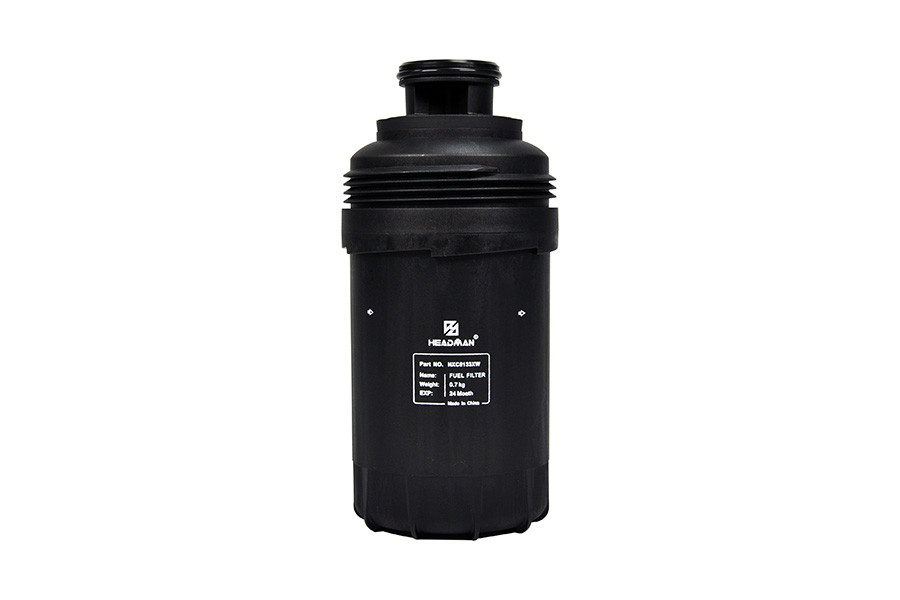
Visible water or sediment in a separator bowl provides another useful warning. Where a transparent bowl is fitted, operators can check for accumulated water and particulate matter during routine inspections. Fuel leakage, damaged seals, loose connections, and a cracked housing should also be investigated promptly. Because similar symptoms can result from a faulty fuel pump, blocked fuel line, sensor malfunction, or other engine issues, proper diagnosis is necessary before replacing the separator.
A fuel water separator generally uses gravity-assisted separation, specialized filtration media, or coalescing technology to remove water from the fuel stream. In a coalescing design, small water droplets combine into larger droplets that can separate more readily from fuel. Depending on the separator construction, the collected water settles in a bowl or designated chamber for drainage.
Over time, solid contaminants can accumulate in the filter media, increasing differential pressure across the element. Differential pressure is the pressure difference between the inlet and outlet of the filter. As the element becomes restricted, fuel flow may decline, particularly when the engine requires a higher fuel supply under heavy loads. If the element is operated beyond its specified limits, media damage or internal bypass may occur in designs that include a bypass path.
Excessive water contamination is another concern. Water may enter fuel through condensation in storage tanks, contaminated deliveries, damaged tank caps, or inadequate storage practices. When the amount of incoming water exceeds the separator's capacity, water may accumulate faster than it can be safely removed. In addition, degraded seals, damaged drain valves, incorrect installation, and incompatible replacement elements can compromise system integrity.
These conditions should not automatically be treated as proof that the separator has reached the end of its service life. Routine drainage may resolve water accumulation, while a clogged element may require replacement. Persistent leakage, structural damage, or confirmed separation failure may require replacement of the complete assembly.
A systematic inspection helps distinguish normal maintenance requirements from genuine component failure. Begin by checking the water-in-fuel warning system, if fitted, and inspecting the collection bowl for visible water or sediment. Drain accumulated water only according to the equipment manufacturer's procedure, using a suitable container and appropriate precautions for handling diesel fuel. Never open a pressurized system or drain a separator while the engine is running unless the equipment manufacturer explicitly specifies a safe procedure.
Next, inspect the housing, drain valve, seals, and fuel connections for leakage or physical damage. Confirm that the separator is installed in the correct flow direction and that its connections remain secure. Incorrect installation can interfere with the intended separation process and may affect system reliability.
Fuel restriction should be evaluated through the appropriate diagnostic method, such as a differential pressure indicator, vacuum gauge, or fuel pressure measurement where the system supports it. A rising differential pressure can indicate a loaded filter element, but readings must be interpreted against the equipment manufacturer's limits. Engine performance alone cannot establish whether a separator is clogged.
If the warning light remains active after proper drainage, water reappears quickly, or the engine continues to experience fuel delivery problems, further inspection is necessary. Check the sensor, fuel tank, fuel lines, primary and secondary filters, and other relevant components. This approach reduces unnecessary replacements and helps identify the actual source of contamination.
Effective Water Separator Maintenance starts with regular inspection and timely water drainage. The inspection frequency should reflect the equipment manufacturer's recommendations, fuel quality, operating hours, storage conditions, and working environment. Machinery operating in humid, marine, agricultural, or remote locations may require closer monitoring because water contamination can develop under demanding conditions.
Operators should also inspect the water sensor and drain mechanism where applicable. A malfunctioning sensor may fail to provide a warning, while a leaking drain valve can allow fuel loss or air ingress in systems where the fuel circuit operates under suction. Seals and bowl connections should be checked during scheduled service, and any damaged component should be replaced with a compatible part.
Correct installation is equally important. The separator must match the required fuel flow, operating pressure, temperature range, connection size, and filtration needs of the equipment. An undersized unit may create excessive flow restriction, while an unsuitable filter medium may not provide the intended water separation performance. The housing material and bowl construction should also be appropriate for the operating environment.
Headman offers oil-water separator models designed for different industrial and equipment requirements. Its published product information describes configurations using corrosion-resistant metal housings, multilayer filtration media, and manual or automatic water discharge options, depending on the model. These design considerations are relevant to buyers evaluating separator durability, service access, and maintenance requirements.
Fuel Filter Replacement is necessary when the filter element becomes restricted, damaged, contaminated beyond its service limits, or unable to maintain the required filtration performance. A separator that collects water normally may only need drainage, not immediate replacement. In contrast, a clogged element, damaged housing, persistent leak, or confirmed internal failure requires corrective action based on the equipment's service instructions.
Replacement timing should not rely on a universal mileage or operating-hour figure. Service intervals vary with engine design, fuel cleanliness, operating conditions, and the filter manufacturer's specifications. If fuel has been heavily contaminated with water or debris, the element may need to be replaced earlier than the normal scheduled interval. Continued operation with a restricted element can compromise fuel delivery, while water passing through the system may contribute to corrosion and wear in fuel pumps and injectors.
During replacement, use an element that matches the original specifications. Check the sealing surfaces, replace damaged O-rings, and install the element according to the manufacturer's instructions. Avoid introducing dirt into the clean side of the fuel system. After servicing, follow the specified priming or bleeding procedure, inspect for leaks, and confirm that warning indicators and engine operation return to normal.
Where the housing remains serviceable, replacing the element alone may reduce maintenance time and material costs. If the housing, drain mechanism, or connection points are damaged, replacing the complete separator may be the safer long-term solution. The decision should be based on inspection results and equipment requirements rather than appearance alone.
Separator performance depends on more than the filter element itself. Separation efficiency, rated flow capacity, operating pressure, media compatibility, housing strength, and drainage design all influence the ability of a system to handle real operating conditions.
Headman's oil-water separator product page lists different models, including HXC514XW, HXC5133XW, HXC5134XW, and HXC5151XW. The company's published product information describes model-dependent operating pressure ranges of approximately 0.5–3.5 MPa, filtration options of 5, 10, 20, and 30 μm, and flow capacities ranging from 10 to 800 L/min. These are broad product-range figures, not specifications that apply to every model. Buyers should confirm the exact model data and suitability for their intended fuel or fluid application before selection.
Filtration accuracy and water separation efficiency should also be evaluated separately. A micron rating generally describes particulate filtration under a defined test method; it does not, by itself, establish how effectively a separator removes free or emulsified water. Buyers should request applicable water separation performance data, rated flow conditions, pressure limits, and element replacement requirements when comparing products.
Material selection is another important factor. Aluminum alloy and stainless-steel housings can provide useful strength and corrosion resistance when correctly specified for the application. Transparent bowls can make water accumulation easier to monitor, while metal bowls may be preferred in applications requiring a different pressure rating or greater protection against impact. The final choice depends on the design, operating environment, and manufacturer's approved configurations.
Fuel water separators are important in applications where engine reliability directly affects productivity and operating costs. In commercial transportation, restricted fuel delivery can disrupt vehicle schedules. In marine equipment, water contamination can be especially challenging because fuel storage and humid operating environments increase the need for effective inspection. Agricultural and construction machinery may operate for extended periods under variable loads and dusty conditions, making routine filter servicing essential.
Industrial operators should consider separator maintenance as part of a wider contamination-control program. Clean fuel storage, inspection of tank vents and caps, proper refueling practices, and timely drainage all help reduce the amount of water entering the system. Monitoring recurring contamination is particularly valuable: if water continues to accumulate rapidly after servicing, replacing the separator without investigating the fuel source may not solve the underlying problem.
For equipment manufacturers, distributors, and maintenance providers, choosing a suitable separator and replacement element can support more predictable servicing and reduce the risk of avoidable fuel system interruptions. Product compatibility, reliable sealing, accessible drainage, and clear service documentation should all be considered during procurement.

 Whatapp: +86-15305732238


